When Two Creative Brains Share One Project
Working on a creative project with your husband is a little like assembling furniture together, except the furniture has feelings, the instructions keep changing, and at some point one of you will say, “I thought we agreed on this,” with the solemnity of a courtroom drama.
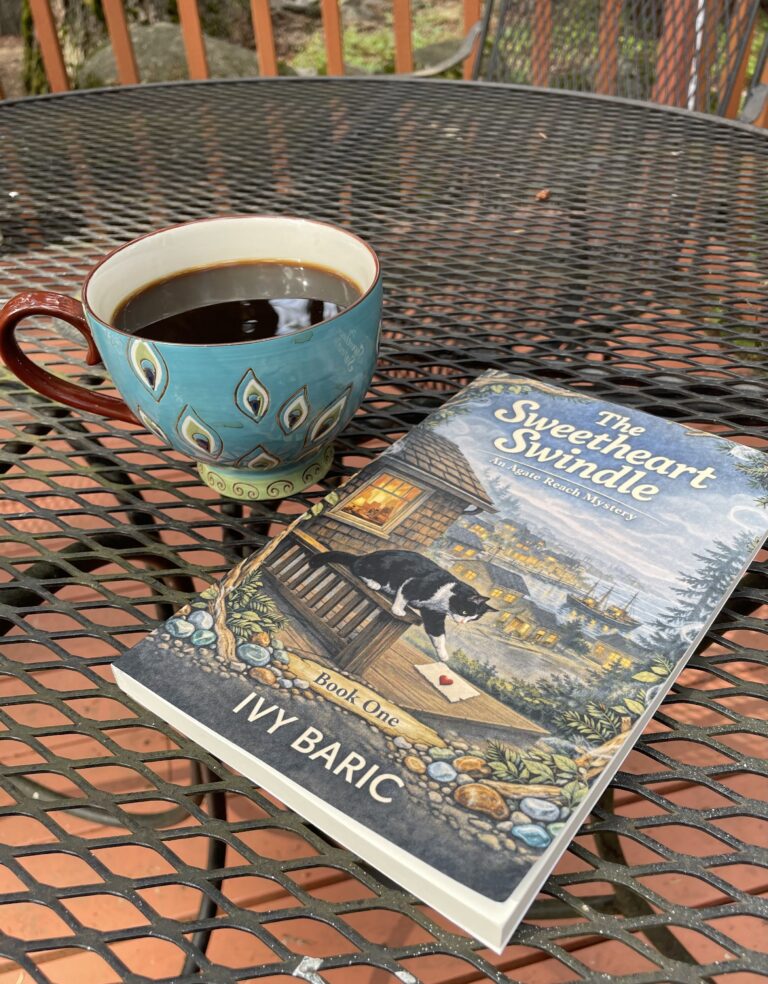
My husband and I are building the Agate Reach Mysteries together. We share the same goal, the same excitement, and the same deep affection for this foggy little fictional town. We do not, however, always arrive at the same idea by the same road.
This is where creative differences enter the room, pull up a chair, and help themselves to the coffee.
Different brains notice different things
One of us may be listening for emotional tone: Does this feel warm enough? Is it funny in the right place? Does the atmosphere have that mix of comfort and unease we want?
The other may be thinking about structure: Does it make sense? Will readers understand it? Can we actually turn this lovely idea into a finished book, cover, website, or launch plan without creating seventeen new problems?
Neither way of thinking is better. Both are useful. They are also occasionally incompatible before breakfast.
The trick has been learning that disagreement does not necessarily mean one person understands the project and the other does not. Often, it means we are protecting different parts of the same thing.
The argument underneath the argument
Creative disagreements are rarely just about the shade of blue, the placement of a sentence, or whether an idea is “too much.” Underneath, there is usually a concern.
One person may be protecting clarity. The other may be protecting personality. One may worry that the project will feel unfinished. The other may worry that polishing it too much will sand away everything interesting.
Once we can name the concern, the conversation gets easier.
“I hate this” is difficult to solve.
“I’m worried this doesn’t feel like us” gives us somewhere to go.
We have learned to separate taste from purpose
There are choices that are simply personal preference. There are also choices that affect whether the project does its job.
I may love a phrase, an image, or an idea. My husband may point out that it creates confusion, cannot be supported technically, or sends the project in a direction we never intended. Annoyingly, this can be true even when I still love it.
The reverse is also true. The neatest, most efficient solution is not always the one with the most life in it. Sometimes a little oddness is exactly what makes something memorable.
So we ask: What is this choice supposed to accomplish? If it works, it stays in the conversation. If it only wins because one of us has become more eloquent through sheer stubbornness, perhaps it needs another day.
Not every decision needs to be made immediately
This may be the least glamorous lesson and the most useful.
When we are tired, hungry, or too close to a problem, we become remarkably capable of treating a minor design choice like an international border dispute. Stepping away is not avoiding the work. Sometimes it is the work.
A walk, a meal, a night’s sleep, or a cat sitting squarely on the materials can reset the scale of things. The impossible disagreement from the night before may look obvious in the morning. Or at least less worthy of dramatic music.
The project needs both of us, not matching versions of us
The best part of a creative partnership is not perfect agreement. It is the surprise of ending up somewhere neither person would have reached alone.
My husband sees gaps I miss. I push for warmth or texture where he might have chosen the cleanest route. We challenge each other’s assumptions. We also make each other laugh, which is useful when a project has developed opinions of its own.
Creative differences can be frustrating. They can also be evidence that both people care deeply and are paying attention.
The goal is not to avoid disagreement. It is to disagree without turning the other person into the problem. Keep the project on the table. Stay curious about what the other person is trying to protect. Remember that “not this” is not the same as “not you.”
And when all else fails, make coffee, consult the cat, and come back tomorrow.
Have you ever worked on a creative project with someone you love? Did your differences make the result stronger, funnier, or simply much more interesting?