5 Red Flags That Someone Online Isn’t Who They Say They Are
The internet is wonderful for finding your people: reader groups, cozy mystery circles, gardening advice, cat photos, and that one person who knows exactly which tea works best during a rainstorm.
It is also, unfortunately, a very convenient place for someone to pretend to be someone else.
Most online conversations are perfectly ordinary. Still, a little healthy skepticism can save a lot of trouble. Here are five red flags worth noticing when someone online does not seem quite real.
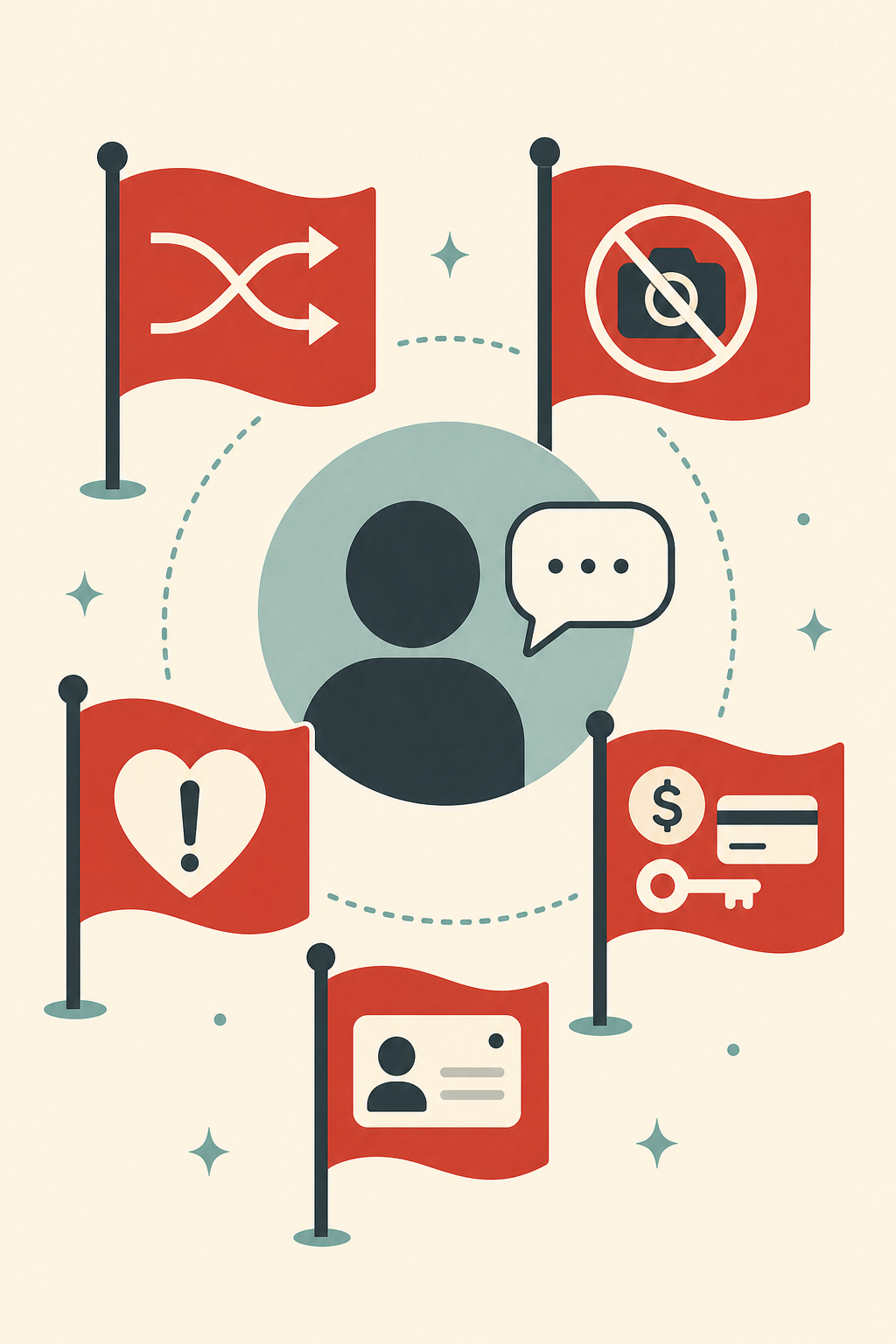
1. Their story keeps changing
One day they live in Seattle. The next, they are “currently overseas.” Their job shifts, their family details blur, or the timeline does not quite hold together.
Everyone forgets small things sometimes. But if the major pieces keep moving, pay attention. A real person usually has a life that stays reasonably consistent.
2. They avoid simple verification
They will send long emotional messages, but they will not do a quick video call. They have endless reasons they cannot take a fresh photo. They dodge direct questions, then make you feel rude for asking.
Privacy matters, of course. But if someone wants your trust while refusing any normal way to prove they are real, that is worth a second look.
3. Everything gets intense very quickly
Fast affection. Fast friendship. Fast secrets. Fast pressure.
Scammers and manipulators often try to create emotional closeness before you have time to think. If someone you barely know is suddenly treating you like their only confidante, step back and breathe.
4. They ask for money, favors, or personal information
This is the big one.
It may sound small at first: a gift card, a temporary loan, help with a bill, a shipping address, or a code sent to your phone.
Do not send money to someone you have not verified. Do not share authentication codes. Do not give out sensitive personal details because someone has a sad story and a polished profile picture.
5. Their online presence feels too perfect, too thin, or oddly generic
A few polished photos. Very little history. Vague comments. No real interactions. A profile that feels more like a brochure than a life.
Not everyone posts constantly, and some people are private. But if their presence feels oddly flat, generic, or disconnected from real human relationships, be careful.
A good rule of thumb
You do not have to be paranoid. Just stay gently skeptical.
Real people can handle reasonable boundaries. Real friends do not rush you, guilt you, or punish you for asking fair questions.
And if something feels off, trust that little bell in the back of your mind. It is probably not being dramatic. It may be doing exactly what it is there to do.